

Practical, Compassionate Tips Every Parent Needs
Parenting is one of the most rewarding — and most demanding — roles in life. But when you’re also navigating depression, anxiety, PTSD, chronic fatigue, or other mental health challenges, it can feel overwhelming, isolating, and exhausting. You’re not alone — and there are effective strategies that help you show up for your children while also supporting your own well-being.
In this post, we’ll walk through practical, trauma-informed tips to help you parent with more confidence, emotional balance, and resilience.
Why This Matters
Parental mental health doesn’t just affect you — it impacts the whole family. Children are perceptive; they notice emotions, routines, and communication patterns, and these shape their emotional development and sense of safety. Research shows that parental stress, if unaddressed, can influence a child’s mental health outcomes, including anxiety and depression risk later in life.
This doesn’t mean your challenges define your parenting. With awareness, support, and intentional habits, you can build a nurturing, stable environment — for both you and your kids. I know because I’ve done this myself. This is just some of what I have learned, and if I could go back in time, this is exactly what I would tell myself:
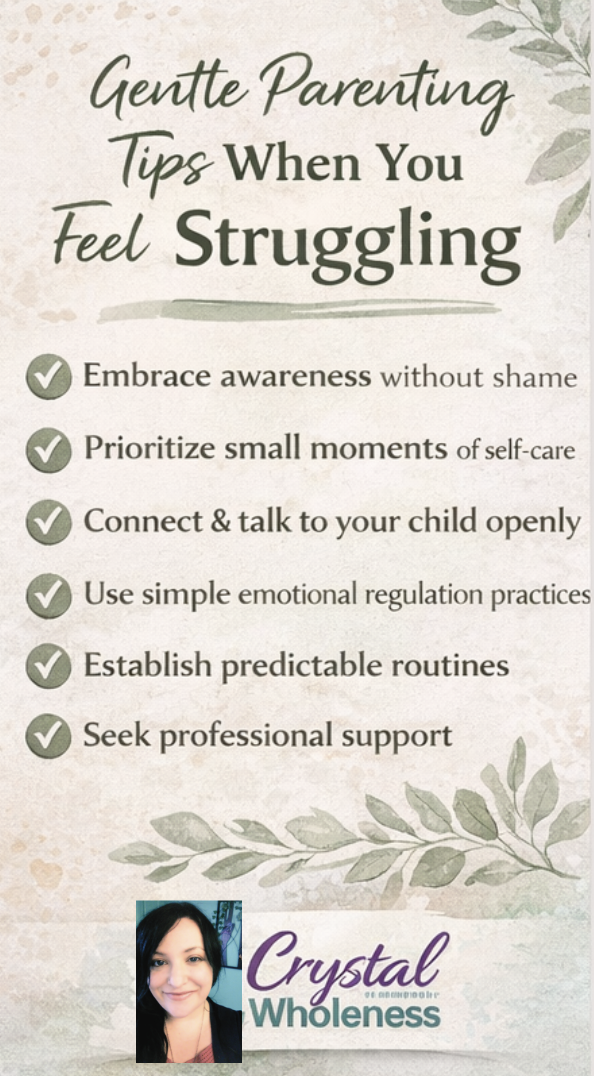
1. Embrace Awareness Over Shame
If you’re living with depression, anxiety, PTSD, or chronic fatigue, you might feel guilty or ashamed at times. It’s important to acknowledge that these are mental and emotional symptoms related to deep underlying conditions, likely related to trauma, and are NOT personal failures. Many parents worldwide face similar struggles — and understanding that helps lessen isolation and self-judgment.
Recognizing your limits isn’t defeat — it’s self-awareness. With clarity, you can make intentional choices about support, schedules, and self-care.
2. Prioritize Self-Care (Yes — Really)
Self-care isn’t an indulgence — it’s a survival strategy. When you feel run down, overwhelmed, or emotionally depleted, your nervous system is signaling that it needs rest. A consistent self-care routine helps you regulate mood, lower stress hormones, and model healthy coping skills for your children.
Try these simple self-care steps:
Sleep hygiene: Aim for consistent sleep — enough rest improves emotional regulation.
Movement: Even short walks can ease anxiety and boost mood.
Micro-breaks: Five minutes of solitude or breathing exercises can reset your system.
Social support: Connect with trusted friends or support groups.
These habits aren’t luxuries — they’re foundational tools that help you parent more gently and effectively.
3. Talk to Your Children Openly (Age-Appropriate)
Honest communication builds trust. You don’t need to disclose every detail, but children benefit when you explain emotions in simple, clear terms:
“Mommy/Daddy feels sad/tired sometimes, but I love you and I’m working to feel better.”
This helps normalize feelings and gives kids tools for emotional intelligence. It reduces confusion and fosters empathy.
They will respect you more when you are real with them.
4. Model Healthy Coping Skills
Children learn most from observation. When they see you use grounding techniques, coping strategies, or emotional check-ins, those become tools they internalize.
Some examples include:
Breathing exercises
Quiet time with a book or coloring
Mindful movement or stretching
Journaling or talking through feelings
Doing these together can be a powerful bonding experience — it strengthens your connection while helping your child develop resilience.
5. Establish Predictable Routines
Routine brings a sense of safety for both you and your child. Consistent mealtimes, bedtimes, and morning/evening rituals help decrease stress, reduce unpredictability, and make emotional regulation easier. Kids thrive on structure — and so does your nervous system.
6. Seek Support — You Don’t Have to Do This Alone
Professional support — aromatherapy, emotional release & healing techniques, and supportive communities — can be transformative. Holistic approaches like AFT (Aroma Freedom Technique) or trauma-informed mentorship offer tools for managing symptoms and creating stable emotional foundations for your family.
Personally, Bach Flower remedies have been truly transformation for not only me, but all of my clients as well, and even the most stubborn of family and friends. Those combined with the above techniques and support are like a Power Punch of healing and emotional balance.
If your daily functioning feels disrupted, reaching out for help isn’t weakness — it’s empowerment.
I offer all of the above in my online holistic wellness community: The Vine Wellness Holistic
7. Practice Emotional Regulation Together
Simple grounding practices help both you and your kids when emotions feel big. Try:
Five deep breaths together
“Name it to tame it” — identifying emotions aloud
Sensory play or movement breaks
These reinforce the idea that emotions are manageable and normal, not something to be feared.
I was AMAZED at how fast & simple this helped both myself and my then-toddler.
For a BONUS of fast effectiveness, pair this with an Aroma Reset.
8. Celebrate Small Wins
Parenting while managing ongoing health challenges is hard work. Laughing with your child, sticking with a bedtime routine, taking five minutes for a grounding practice — these are victories worth noticing.
Progress isn’t linear. But every moment you choose presence, care, and resilience is a step forward.
You Are Not Alone
Struggling doesn’t disqualify you from being a good parent — it simply makes your journey more human. With awareness, self-care, routines, and connection, you can parent from a place of compassion for both your child and yourself.
Watch the Full Video for Practical Tips & Gentle Guidance {Click the Image}
I hope this shines a light into some of the darkness you are dealing with. I have been there and I still struggle too sometimes. You are NOT alone. You ARE enough, just as you are. If this has helped you in anyway, please connect with me and share.
Wishing you SO much love & kindness on your healing journey,
~ Crystal